





Operationally, Naples requires active coordination due to traffic density and shared infrastructure, but it remains fully accessible.
Private Jet Operations into Naples International Airport
Zero compromise. Absolute precision. Cost effective.

our services
Naples Is Accessible, But Never Passive
Naples is not difficult because of runway limitations. It is complex because of how traffic flows through the airport.
Private jet flights operate into Naples alongside dense commercial activity, which means access is always available, but rarely frictionless.
The airport accepts a full range of business jets. What defines the operation is not aircraft capability, but timing.
Our aviation specialists at Zadra Aviation Charter plan Naples movements around traffic sequencing, ground capacity, and aircraft positioning across Southern Europe. In practice, securing the right arrival window is often more important than selecting the aircraft itself.

Airport Overview
Naples International Airport sits within immediate proximity to the city and acts as the primary aviation gateway to Southern Italy.
The airport operates with a single runway and a mixed-use structure where commercial and private aviation share the same operational environment.
This creates a specific pattern:
- Airline traffic defines peak periods
- Business aviation adapts around those peaks
- Ground operations compress during high-density windows
From an operational standpoint, Naples behaves as a constrained system where flow management replaces slot dependency.
General facts about Naples International Airport
| Fact | Details |
|---|---|
| ICAO Code | LIRN |
| IATA Code | NAP |
| Location | Naples, Italy |
| Distance to City | ~3 km |
| Elevation | 294 ft |
| Runway | Single asphalt runway |
| Runway Length | 2,628 meters |
| Airport Type | International Airport of Entry |
| Operating Hours | 24h (subject to operational restrictions) |
Private Aviation at Naples International Airport

Dedicated FBOs
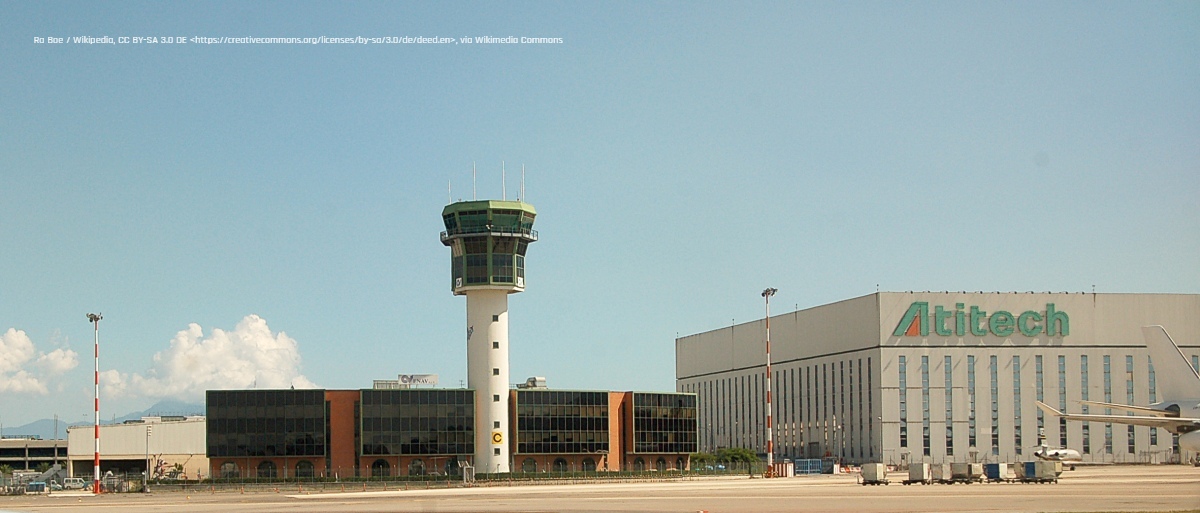
At Naples, ground handling for private aviation is provided by Aviapartner and Sky Services. The airport does not operate a fully independent private jet terminal; instead, handling services are integrated within the main airport infrastructure, with dedicated support layered into a shared operational environment.
Handling providers manage a range of coordinated services, including aircraft parking within limited apron space, passenger processing through priority channels, fueling aligned with overall traffic flow, and full crew support and documentation.
Operationally, efficiency at Naples relies more on precise sequencing than on dedicated infrastructure. During peak traffic periods, ground operations become compressed, which can impact turnaround times and requires close coordination between flight crews and ground teams.
Our aviation specialists at Zadra work to align handling timelines with assigned arrival slots, helping reduce ground delays and maintain schedule integrity.
For U.S.-based coordination and support, Naples Aviation is located at:
160 Aviation Drive North
Naples, FL 34104
United States
Runway Capabilities
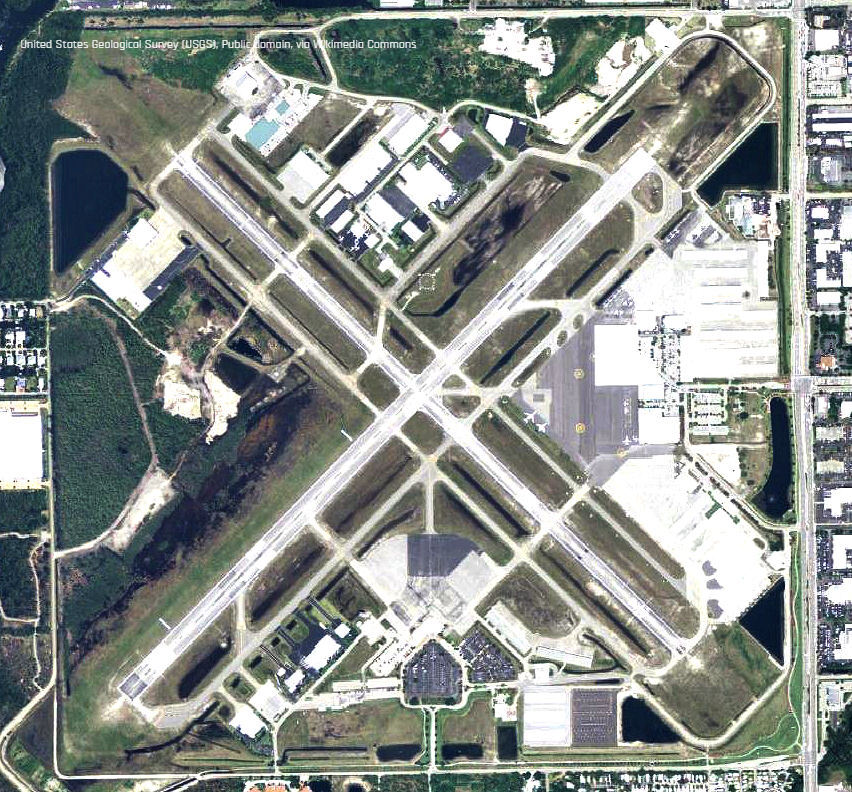
The single runway at Naples extends to approximately 2,628 meters and supports both visual and instrument approaches.
Aircraft capability is not the limiting factor.
The runway accommodates:
- Light jets operating regional European routes
- Midsize and super midsize jets with full payload flexibility
- Heavy and long-range jets performing intercontinental missions
The constraint lies in runway usage density.
With only one runway available, all arrivals and departures are sequenced within the same flow.
From an operational standpoint, this increases the importance of:
- Arrival timing precision
- Departure slot alignment
- Traffic gap identification
Why Charter to Naples
Naples is selected despite its constraints, not because of them.
The airport provides immediate access to destinations that would otherwise require extended transfers.
These include:
- Amalfi Coast
- Capri and Ischia
- Sorrento Peninsula
Alternative airports may offer smoother operations, but they introduce additional travel time after landing.
From a real-world perspective, clients choose Naples when proximity outweighs operational simplicity.
Private aviation allows direct entry into the region, even within a constrained airport environment.
Ground Transportation
Ground logistics at Naples are defined by proximity.
The airport sits within minutes of the city, allowing a rapid transition from aircraft to final destination.
Typical transfer patterns include:
- Chauffeur-driven vehicles in central Naples
- Direct transfers to ports for yacht connections
- Helicopter transfers to Capri or the Amalfi Coast
Traffic conditions can influence transfer times, particularly during peak tourist periods.
Our aviation specialists at Zadra coordinate ground, sea, and air transfers as part of a unified itinerary to ensure continuity beyond arrival.
Private Aviation at Naples International Airport
Yes. The runway supports heavy and long-range aircraft without restriction.
Traffic sequencing on a single runway is combined with high commercial activity.
Airports such as Rome or Salerno may offer less congestion, but increase onward travel time.
Because it provides the closest access to key destinations along the Amalfi Coast.



Trusted by our clients
4.9 / 5
Based on 1,328 verified reviews
Geneva 
ZUG
 A Swiss-Based Company
 Go Top