





No. However, summer demand may require earlier coordination.
Private Jet Access to Palanga International Airport
Nessun compromesso. Precisione assoluta. Conveniente.

our services
Palanga does not operate under constant demand. For most of the year, it remains open, accessible, and operationally straightforward. During summer, the pattern shifts.
The airport becomes a primary entry point to Lithuania’s Baltic coast, and traffic concentrates around leisure travel cycles. This creates a short but intense period during which planning requires greater precision.
Private jet flights into Palanga are therefore built around timing rather than limitation.
Our aviation specialists at Zadra Aviation Charter structure each operation by aligning aircraft availability, seasonal demand, and ground coordination to maintain consistency throughout the year.

Airport Overview
Palanga International Airport serves western Lithuania and provides direct access to both Palanga and the port city of Klaipėda.
Located close to the Baltic coastline, the airport functions as a regional international gateway with strong seasonal variation.
Its operational profile is shaped by:
- Moderate year-round traffic
- Concentrated summer demand
- Compact and efficient infrastructure
Outside peak season, the airport operates with minimal congestion. During summer, traffic density increases but remains manageable with planning.
General facts about Palanga International Airport
| Fact | Details |
|---|---|
| ICAO Code | EYPA |
| IATA Code | PLQ |
| Location | Palanga, Lithuania |
| Distance to City | ~7 km |
| Elevation | ~10 m |
| Runway | 01/19 |
| Runway Length | ~2,280 meters |
| Airport Type | Regional International |
| Operating Hours | Standard operational schedule |
Private Aviation at Palanga International Airport
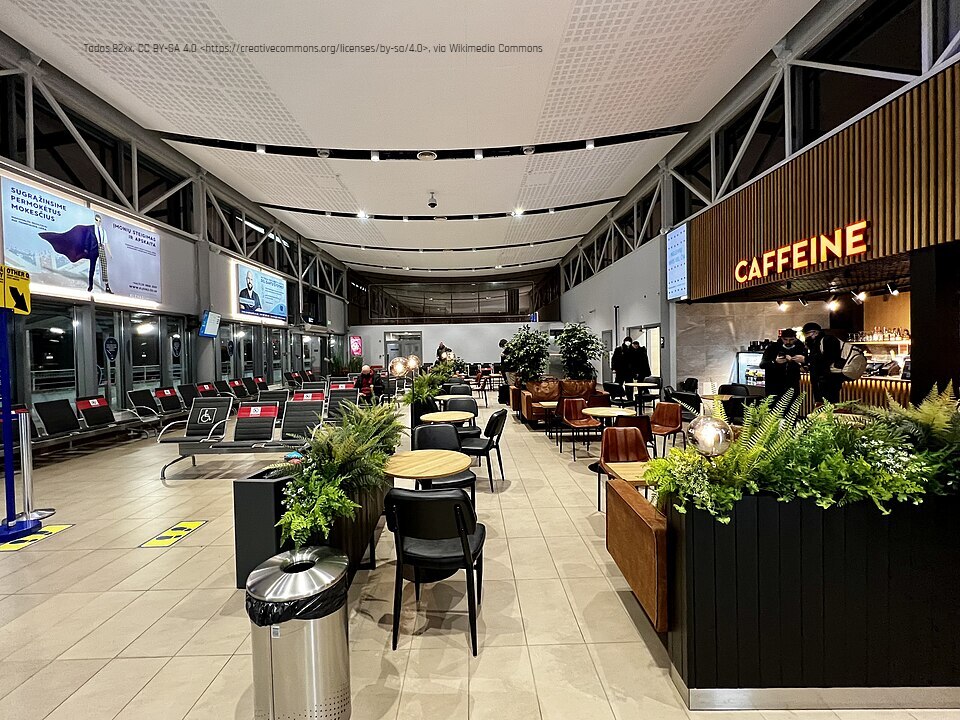
Dedicated FBOs
Palanga Airport Authority manages ground handling and operational coordination at the airport.
Palanga operates with an integrated handling structure rather than separate private jet terminals.
Handling coordination includes:
- Aircraft parking and apron management
- Passenger processing through compact facilities
- Fuel supply and turnaround planning
- Crew support and operational logistics
From an operational perspective, the airport acts as both an infrastructure provider and a handling authority.
This reduces procedural complexity and allows:
- Faster passenger movement
- Minimal waiting times
- Direct access between aircraft and ground transport
Our aviation specialists at Zadra coordinate handling in advance, particularly during peak summer periods.

Runway Capabilities
The runway at Palanga measures approximately 2,280 meters and supports a wide range of aircraft operating within European routes.
This allows:
- Light jets for short regional flights
- Midsize and super midsize jets for intra-European missions
- Selected heavy jets depending on payload and routing
From a technical standpoint, runway length is sufficient for most operations within Europe.
Operational considerations include:
- Coastal weather patterns, such as wind and fog
- Seasonal demand affecting scheduling
- Payload adjustments for longer missions
Aircraft selection is typically based on mission requirements rather than infrastructure constraints.

Why Charter to Palanga
Palanga is chosen for proximity.
It provides direct access to Lithuania’s coastline, avoiding longer ground transfers from inland airports.
From a real-world perspective, passengers use Palanga when:
- Travelling to Baltic seaside resorts
- Accessing Klaipėda and the surrounding areas
- Prioritising location over airport scale
Private aviation enables direct routing into a region with limited commercial connectivity.

Ground Transportation
Ground transportation from Palanga is efficient due to short distances and simple road access.
Typical transfer times:
- Palanga city: ~10 minutes
- Klaipėda: ~30 minutes
Available options include:
- Chauffeur-driven vehicles
- Taxi and private transfers
- Regional road connections
Traffic variability is low, allowing predictable travel times.
Our aviation specialists at Zadra coordinate ground logistics alongside flight planning to ensure continuity from arrival to final destination.
Private Aviation at Palanga International Airport
The airport supports light, midsize, and some heavy jets depending on operational conditions.
During the summer, particularly in July and August.
Yes. It provides efficient access to the Baltic coast with minimal congestion outside peak season.
Seasonal demand and coastal weather conditions.


Apprezzato dai nostri clienti
4.9 / 5
Sulla base di 1.328 recensioni verificate
Ginevra 
ZUG
 Un'azienda con sede in Svizzera
 Torna in alto