





Both. It serves as a destination, but is frequently used as a gateway to other islands.
Private Jet to/from Lynden Pindling International Airport (NAS)
Sin concesiones. Precisión absoluta. Rentable.

nuestros servicios
Lynden Pindling International Airport operates less as a final destination and more as a central node within Caribbean private aviation.
Flights into Nassau are typically part of a broader movement. Aircraft arrive, reposition, refuel, or transfer passengers before continuing to smaller islands or maritime destinations. Our aviation specialists at Zadra approach Nassau as a coordination point where international routing, customs clearance, and onward logistics intersect.
In practice, Nassau is where journeys are reorganised rather than completed.

Descripción general del aeropuerto
Lynden Pindling International Airport is located west of Nassau and serves as the primary international entry point to the Bahamas.
Unlike smaller island airports, it is built for volume and connectivity. The airport handles a constant mix of airline traffic and private jet movements, yet maintains a structure that allows both to operate efficiently.
Its proximity to the United States positions it as a natural transition point between continental and island aviation. Aircraft frequently use Nassau to enter Bahamian airspace, complete formalities, and then continue to secondary destinations.
Operationally, Nassau is defined by flow rather than constraint.
General facts about Lynden Pindling International Airport (NAS)
| Datos | Detalles |
|---|---|
| Código ICAO | MYNN |
| Código IATA | NAS |
| Ubicación | Nassau, Bahamas |
| Distancia al Centro de la Ciudad | ~16 km |
| Tipo de Aeropuerto | International |
| Pistas | 2 |
| Pista más larga | ~3,385 m |
| Horario de Operación | 24/7 |
| Requisito de Slot | Generalmente no requerido |
| Perfil de tráfico | High (mixed traffic) |
Private Aviation at Lynden Pindling International Airport (NAS)

FBOs Dedicados
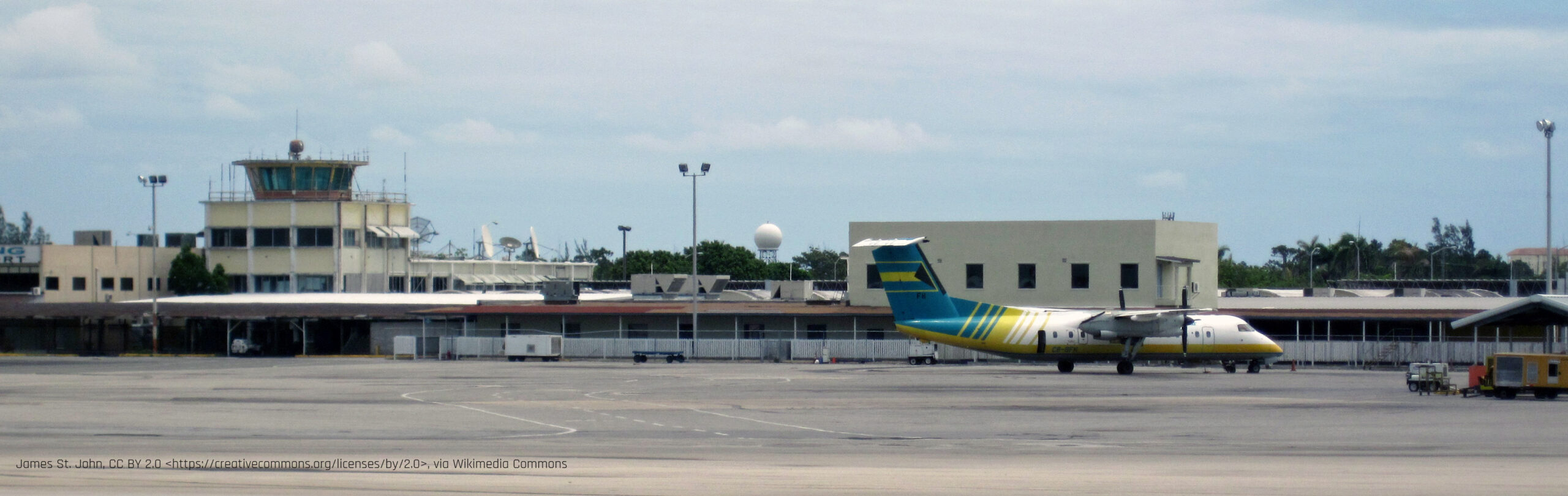
Lynden Pindling International Airport handling services provide a fully integrated environment for business aviation. Designed to accommodate continuous private jet traffic, the infrastructure supports both quick turnarounds and high passenger volumes with efficiency and discretion.
Core services include passenger and crew processing, aircraft fueling and servicing, customs clearance within dedicated facilities, and coordination of onward ground or air transfers. The operational setup is built around synchronisation, as multiple aircraft movements often overlap, requiring precise timing across arrival, handling, and departure phases.
Jet Nassau operates within this ecosystem, contributing to the seamless handling experience. Zadra works directly with local providers to ensure alignment across aircraft positioning, passenger flow, and onward connections, maintaining continuity throughout each stage of the journey.
Capacidades de la Pista
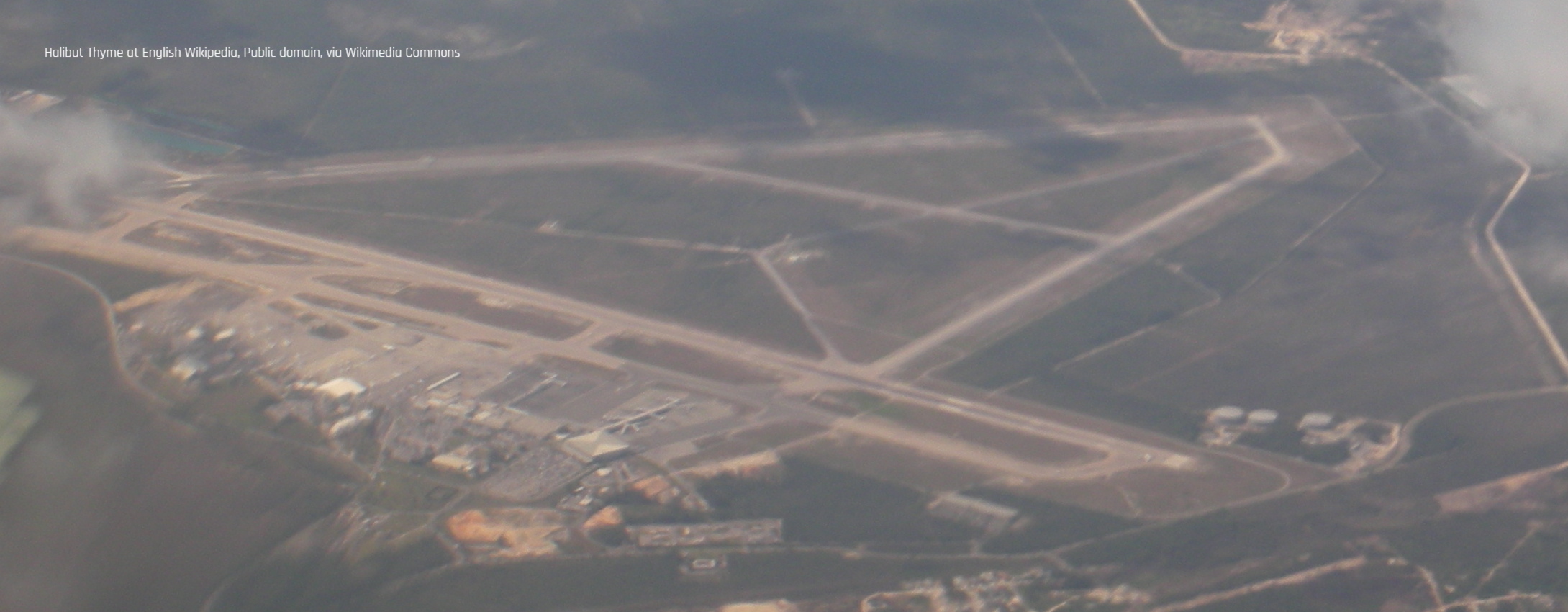
Nassau operates two long runways, with the primary runway extending to approximately 3,385 meters, allowing unrestricted operations across all aircraft categories, including intercontinental private jet flights, heavy and ultra-long-range aircraft, and high-frequency movements without performance limitations. From a technical standpoint, runway length is not a constraint. Operational considerations instead relate to traffic density during peak seasons, turnaround coordination, and weather patterns typical of tropical regions. The airport supports capability at scale, with minimal structural limitations.

Why Charter via Nassau
Nassau is rarely just a destination. It is a strategic entry point into a fragmented geography. Private jet clients use Nassau to access multiple islands within a single itinerary, to transition between air travel and yachting, and to optimise routing from North America. The airport enables a modular approach to travel, where long-haul aircraft connect with smaller regional movements. From a planning perspective, Nassau simplifies complexity by centralising entry, clearance, and redistribution.
Transporte Terrestre
Ground transport in Nassau is closely linked to onward travel rather than standalone transfers. Typical movements include transfers to marinas and yacht terminals, short transfers to resorts and private residences, and coordination with domestic flights to the outer islands. Travel times are relatively short, typically within 20 to 30 minutes depending on the destination. Available options include chauffeur-driven vehicles, private transfers, direct yacht connections, and helicopter transfers where required. Zadra coordinates all onward transport to ensure seamless transition between air, land, and sea.
Private Aviation at Lynden Pindling International Airport (NAS)
Sí. El aeropuerto admite todas las categorías de aeronaves sin restricción.
Generally not, although coordination may be required during peak periods.
For customs clearance and onward coordination to smaller islands or yachts.
It varies. Some remain for passenger stays, while others reposition after drop-off.


La confianza de nuestros clientes
4.9 / 5
Basado en 1 328 opiniones verificadas
Ginebra 
ZUG
 Una empresa con sede en Suiza
 Ir arriba