





To avoid airline congestion while maintaining full aircraft capability.
Private Jet to/from Miami-Opa Locka Executive Airport (OPF)
Sin concesiones. Precisión absoluta. Rentable.

nuestros servicios
Miami-Opa Locka Executive Airport sits at the centre of private jet activity in Miami, but for a very specific reason: it removes the friction that larger airports introduce without sacrificing aircraft capability.
Flights into Opa-locka are rarely accidental. They are chosen when aircraft size, turnaround speed, and operational clarity need to align. Our aviation specialists at Zadra treat OPF as a control point within the Miami system, where heavy jets can operate efficiently without entering airline-driven traffic flows.
In practical terms, this is where complexity is reduced without reducing capability.
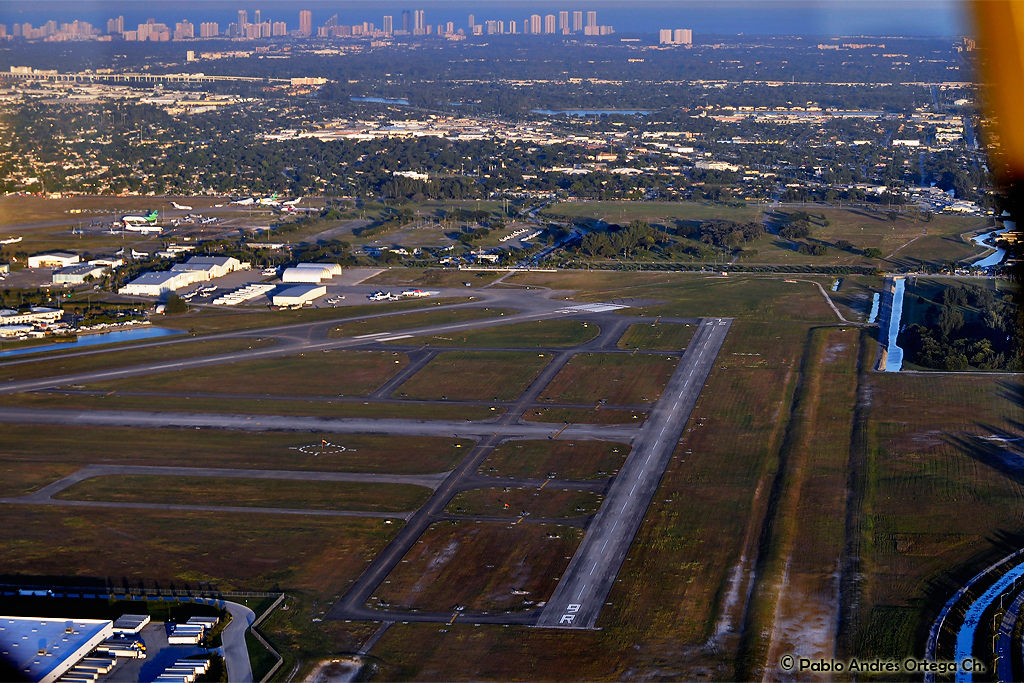
Airport overview
Opa-locka Executive Airport is located north of central Miami and functions as a high-density private aviation field rather than a mixed-use airport.
Its structure is fundamentally different from Miami International. There are no commercial airline banks dictating movement, and aircraft sequencing is significantly simplified. At the same time, the airport maintains runway and infrastructure capabilities that support large aircraft.
This creates a rare balance. The airport handles volume, but not congestion in the traditional sense.
Within the Miami aviation landscape:
- MIA absorbs global airline and wide-body traffic
- TMB focuses on speed for smaller aircraft
- OPF handles the majority of large private jet operations
It is not the busiest airport. It is the most purpose-aligned.
General facts about Miami-Opa Locka Executive Airport (OPF)
| Datos | Detalles |
|---|---|
| Código ICAO | KOPF |
| Código IATA | OPF |
| Ubicación | Opa-locka, Florida, United States |
| Distance to Downtown Miami | ~17 km |
| Tipo de Aeropuerto | General Aviation |
| Runways | 3 |
| Longest Runway | ~2,439 m |
| Horario de Operación | 24/7 |
| Requisito de Slot | Not required |
| Traffic Profile | High (private aviation-focused) |
Private Aviation at Miami-Opa Locka Executive Airport (OPF)
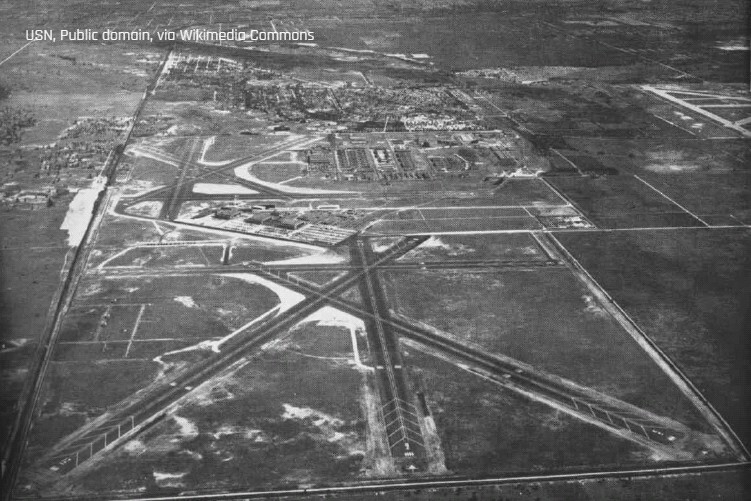
FBOs Dedicados
Atlantic Aviation Opa-locka operates within an FBO ecosystem built around high-volume private aviation.
Unlike airports with limited handling capacity, Opa-locka is structured to support continuous movement of large aircraft.
At the center of this operation is Atlantic Aviation Opa-locka, a primary fixed-base operator providing comprehensive ground support for private and corporate aviation.
Services include:
- Dedicated passenger and crew facilities
- Aircraft fueling and technical support
- Customs and immigration coordination
- Hangar space and ramp management
The key difference is flow. Handling is designed to move aircraft and passengers efficiently, even during peak periods.
Zadra coordinates directly with FBO providers to ensure that arrival, servicing, and departure operate as a single continuous process.
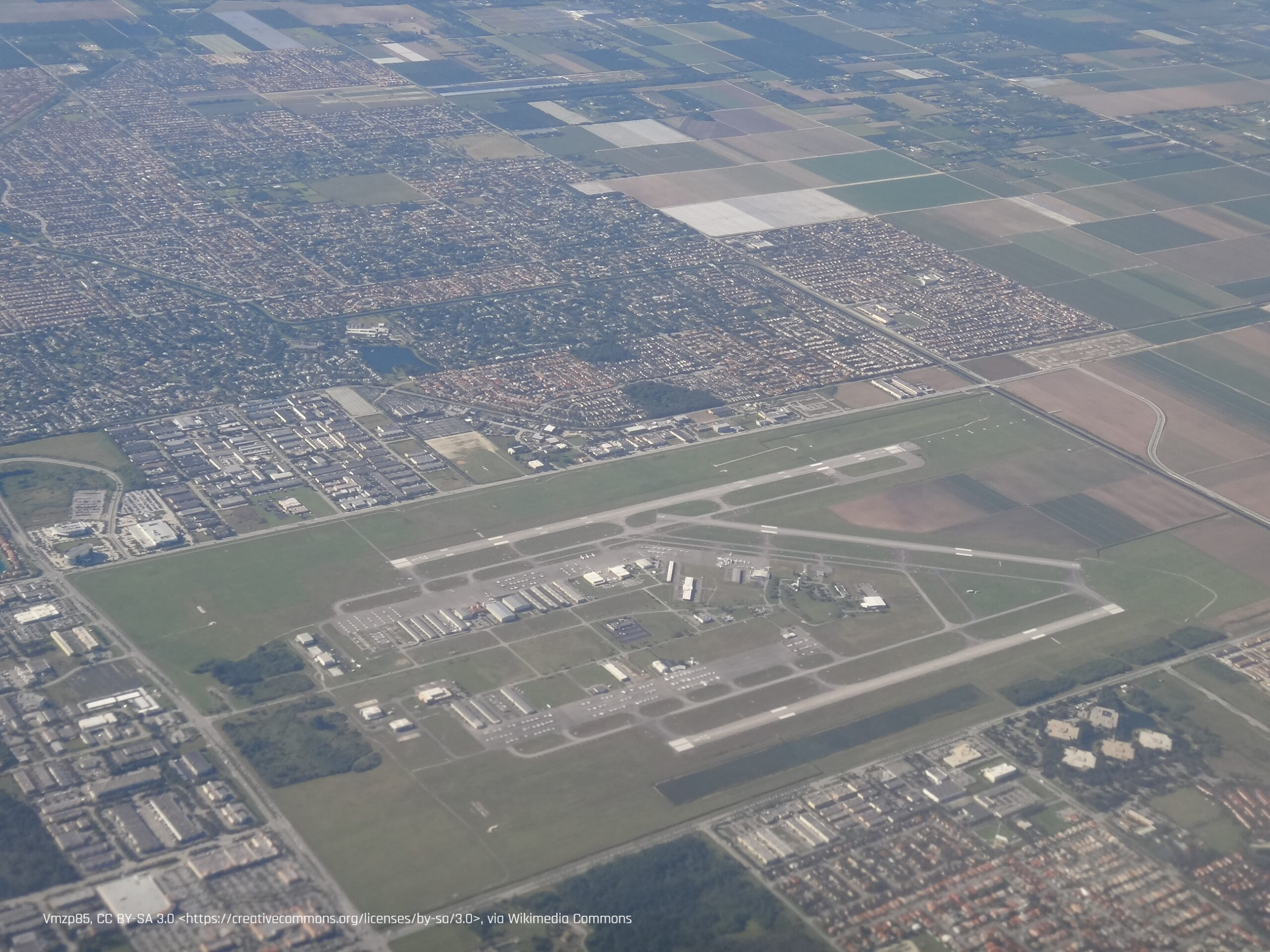
Capacidades de la Pista
Opa-locka operates three runways, with the longest extending to approximately 2,439 meters.
This provides sufficient performance for:
- Heavy jets operating transatlantic routes
- Long-range departures under controlled conditions
- High-frequency operations across multiple aircraft categories
Unlike smaller general aviation airports, runway length does not significantly limit operations.
However, performance planning still considers:
- Payload versus range
- Environmental conditions
- Departure routing
From a technical perspective, the airport supports capability without requiring the infrastructure of a major international hub.
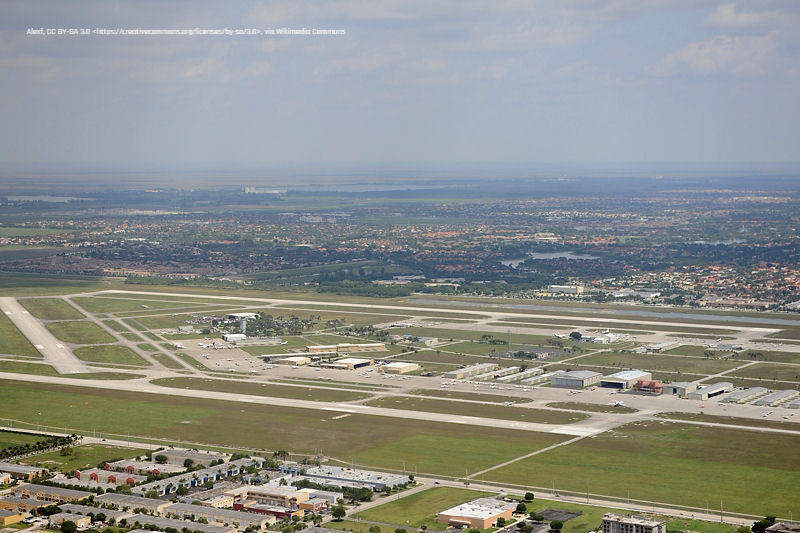
Why Charter via Opa-locka
Opa-locka is selected when operational clarity becomes more valuable than airport scale.
Private jet clients use OPF when:
- Aircraft size requires full performance capability
- Avoiding airline congestion is a priority
- Turnaround speed directly impacts the itinerary
It becomes particularly relevant when:
- MIA introduces unnecessary complexity
- Smaller airports cannot support the aircraft
- Scheduling must remain flexible
From a planning perspective:
Opa-locka is not an alternative. It is often the optimal solution.
Ground Transportation
Ground transport from Opa-locka is structured around access to both business and leisure areas of Miami.
Typical transfer times:
- Downtown Miami: approximately 20–25 minutes
- Miami Beach: approximately 25–30 minutes
Available options include:
- Chauffeur-driven vehicles
- Private transfers
- Helicopter connections for faster regional access
The airport’s location provides balanced access across the metropolitan area.
Zadra coordinates all ground logistics to ensure continuity between air and ground movement.
Private Aviation at Miami-Opa Locka Executive Airport (OPF)
Yes. It supports intercontinental operations under standard conditions.
Yes, but traffic is almost entirely private aviation, which changes how operations flow.
No. The airport operates without slot restrictions.
Opa-locka supports larger aircraft and longer-range missions.
La confianza de nuestros clientes
4.9 / 5
Basado en 1 328 opiniones verificadas
Ginebra 
ZUG
 Una empresa con sede en Suiza
 Ir arriba