





Some smaller aircraft can, but most operations involve a transfer from a larger airport.
Private Jet Planning to Pemberton Regional Airport
Aucun compromis. Une précision absolue. Un excellent rapport qualité-prix.

nos services
Pemberton is not the destination in the traditional sense.
It is where fixed-wing aviation reaches its limit, and something else takes over.
Flights into this part of British Columbia are built in layers. A long-range jet gets you into the region. From there, the operation transitions into something more adapted to the terrain, typically a helicopter.
Pemberton sits at that transition point.
Our aviation specialists at Zadra Aviation Charter do not plan this as a single flight. They build it as a sequence, where aircraft type, timing, and terrain all connect without gaps.
Présentation de l'aéroport
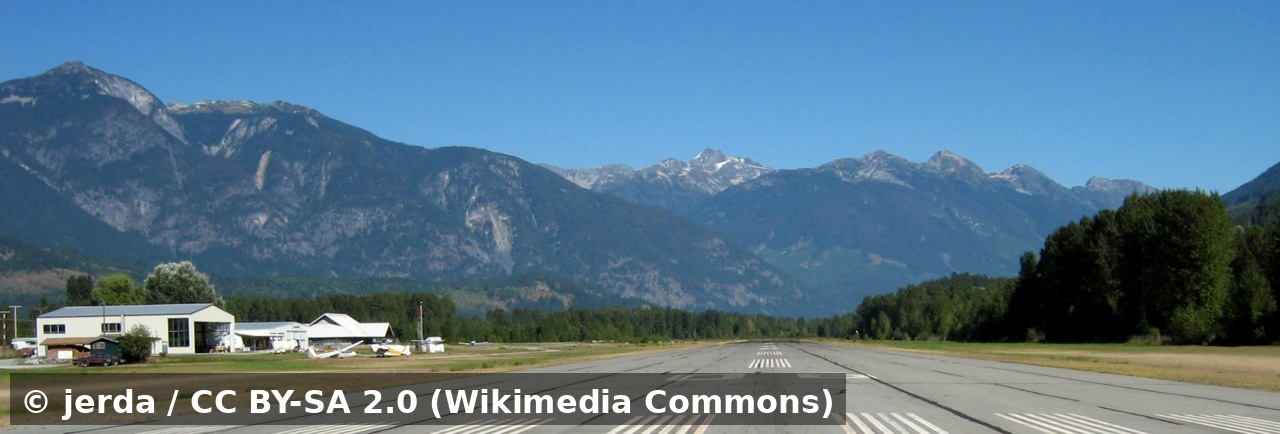
Pemberton Regional Airport operates with minimal infrastructure in a valley environment north of Whistler.
There is no tower, no heavy traffic system, and no buffer between aircraft operations and the surrounding terrain.
What defines the airport is not its facilities, but its limitations:
- Daytime-only operations
- No instrument approaches
- No runway lighting
This is not a restrictive environment. It is a precise one.
Flights operate when conditions allow them to operate well, not just when they are technically possible.
General facts about Pemberton Regional Airport
| Faits | Détails |
|---|---|
| Code OACI | CYPS |
| Localisation | Pemberton, British Columbia, Canada |
| Distance to Town | ~8 km |
| Altitude | ~670 ft |
| Piste | 06/24 |
| 2 499 mètres | ~1,194 meters |
| Type d'aéroport | Regional aerodrome |
| Operating Conditions | Day VFR only |
Private Aviation at Pemberton Regional Airport
FBOs dédiés
Pemberton Helicopters provides the core aviation support at the airport.
This is not a conventional FBO. It operates as a hybrid between a helicopter operator and a ground coordination provider.
What this means in practice:
- Helicopter transfers are integrated directly into the arrival flow
- Ground handling is functional rather than segmented
- Passenger movement is immediate and direct
There is no separation between arrival and onward transfer.
You land, you move, you continue.
Our aviation specialists at Zadra coordinate directly with Pemberton Helicopters to ensure aircraft arrival aligns with helicopter readiness, eliminating waiting time on the ground.

Capacités de la piste
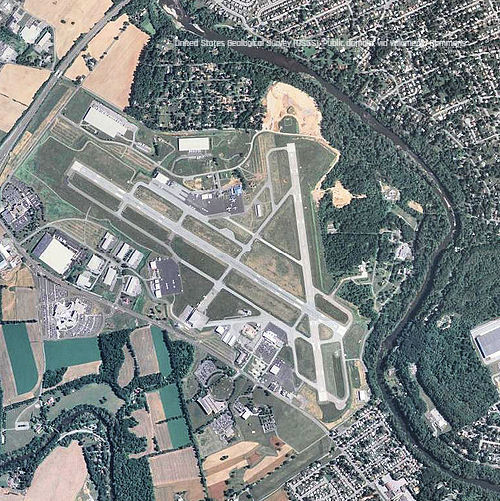
The runway at Pemberton measures approximately 1,194 meters and operates without lighting or instrument support.
This creates a clear operational boundary.
Aircraft must be able to:
- Land and depart within short-field performance margins
- Operate under visual flight rules
- Adapt to terrain-influenced approach paths
Larger business jets are not suited for direct operations here.
This is why aircraft selection is not based on passenger preference, but on operational compatibility.

Why Charter to Pemberton
You do not choose Pemberton for the airport. You choose it for access.
Elle offre une entrée vers :
- Remote lodges
- Backcountry ski areas
- Private wilderness properties
Using a larger airport alone leaves the final segment unresolved.
Pemberton completes that segment.
From a real-world perspective, this is where private aviation becomes a coordinated system rather than a single aircraft booking.

Transport Terrestre
Ground transport exists, but it is secondary.
Most onward movement is handled by:
- Helicopter transfers directly from the airport
- Pre-arranged private vehicles for short distances
- Lodge-operated pickups
Distances are not large. Terrain is what defines travel time.
Our aviation specialists at Zadra align air and ground phases so that there is no interruption between arrival and final destination.
Private Aviation at Pemberton Regional Airport
Runway length, daylight-only operations, and lack of instrument procedures.
Because it provides the most direct and reliable access to remote terrain.
Yes, but indirectly. It supports access to remote luxury experiences rather than offering infrastructure itself.
Yes, but conditions vary, especially in winter.
Trusted by our clients
4.9 / 5
Based on 1,328 verified reviews
Genève 
ZUG
 Une entreprise basée en Suisse
 En haut