





Yes. The airport supports a wide range of aircraft and offers efficient handling conditions.
Private Jet Charter to and from Turku Airport (EFTU)
Aucun compromis. Une précision absolue. Un excellent rapport qualité-prix.

nos services
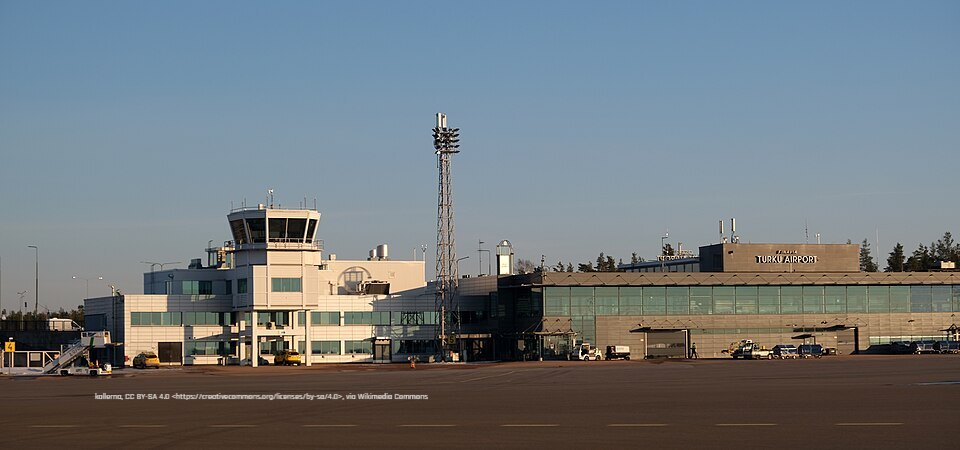
Turku Airport (EFTU) sits in a category of its own within Nordic private aviation. It is not defined by scale, nor by traffic volume, but by how efficiently it connects a strategically important region to the rest of Europe.
Private jet travel into Turku is rarely about the airport itself. It is about access. Access to Finland’s southwestern industrial corridor, to maritime networks across the Baltic, and to a region where time-sensitive travel often replaces commercial routing altogether.
From an operational standpoint, Turku offers a quieter, more controlled environment than Helsinki. That difference is not cosmetic. It directly affects how flights are planned, how aircraft are positioned, and how quickly movements can be executed.
Our aviation specialists at Zadra Aviation Charter approach Turku with a focus on practical efficiency. Aircraft availability, routing logic, and ground coordination are aligned in real time, ensuring that each mission reflects actual operating conditions rather than generic assumptions.

Présentation de l'aéroport
Located just north of the city, Turku Airport provides immediate access to one of Finland’s most functionally diverse regions. The surrounding area combines industrial activity, logistics infrastructure, and maritime connectivity, creating a travel profile that is both regional and international.
Unlike larger Nordic hubs, Turku does not operate under sustained congestion pressure. This changes the rhythm of operations.
Aircraft movements are handled with less sequencing delay
Ground coordination is more direct
Turnaround times are typically shorter
However, this does not mean the airport is simplified. It remains fully integrated into European aviation systems, operating under the same regulatory and operational frameworks as larger airports.
In real-world charter operations, this combination of structure and flexibility is what makes Turku particularly effective.
General facts about Turku Airport (EFTU)
| Faits | Détails |
|---|---|
| Code OACI | EFTU |
| Code IATA | TKU |
| Localisation | Turku, Finland |
| Type d'aéroport | International, Commercial + Aviation générale |
| Altitude | 162 ft / 49 m |
| Pistes | 1 |
| 2 499 mètres | 2,500 m / 8,202 ft |
| Coordination des créneaux | Sans restriction de créneaux |
| Disponibilité des douanes | Oui |
Private Aviation at Turku Airport (EFTU)

FBOs dédiés
Handling at Turku Airport is structured around centralised coordination, where efficiency comes from simplicity rather than scale.
At Turku Airport, business aviation handling includes:
- Airpro OY Turku
Adresse complète FBO / Handling (Référence opérationnelle) :
Airpro OY
Turku Airport
Lentoasemantie 150
20360 Turku
Finlande
Airpro OY provides:
- La gestion des aéronefs et la coordination des aires de trafic
- L'assistance aux passagers et la facilitation VIP
- Le soutien aux équipages et la coordination des départs
- Les services de ravitaillement en carburant et les services opérationnels
From an operational standpoint, centralised handling reduces fragmentation.
There is no complex layering of multiple FBO providers. Instead, coordination is direct, which improves consistency.
Passenger movement is typically immediate, with minimal separation between landside access and aircraft.
Our aviation specialists at Zadra Aviation Charter work closely with Airpro OY to ensure that:
- Aircraft readiness aligns with passenger timing
- Ground handling reflects mission-specific requirements
- Turnaround remains predictable even in winter conditions
In real-world operations, this type of structure reduces variability and improves execution reliability.

Capacités de la piste
Turku Airport operates a single runway (08/26), measuring approximately 2,500 meters.
On paper, this places the airport in a mid-capability category. In practice, it offers more flexibility than its classification suggests.
The runway supports:
Full operations for light and midsize jets
Efficient European range missions
Selected long-range departures, depending on aircraft and payload
However, operational reality introduces nuance.
Cold temperatures improve aircraft performance margins
Winter procedures extend ground handling time
Dans la planification réelle :
Aircraft selection balances range requirements with payload
Departure profiles are adjusted based on seasonal conditions
Compared to smaller regional airports, Turku provides a stable and predictable operating platform.

Why Charter to Turku
Turku is not a headline destination, and that is precisely its advantage.
It serves a region where travel is driven by necessity rather than visibility. Industrial activity, logistics networks, and cross-border business define demand.
Key drivers include:
- Maritime and shipping industries
- Regional corporate travel
- Nordic and Baltic connectivity
Du point de vue du client :
Private jet travel removes dependence on indirect commercial routes
Travel time is reduced across distributed destinations
Scheduling remains flexible and adaptable
Turku works best when efficiency is the priority.
Transport Terrestre
Ground transport in Turku reflects the same principles as the airport itself: direct, functional, and efficient.
Nos spécialistes en aviation chez Zadra coordonnent :
- Les transferts avec chauffeur
- Executive vehicles for business travel
- Connections to regional industrial and logistics sites
Typical transfer times are short:
- City centre within approximately 15 minutes
- Industrial zones within immediate reach
D'un point de vue opérationnel :
Vehicle access is immediate
Minimal congestion allows rapid onward movement
This creates a continuous transition from aircraft to the final destination without unnecessary delay.
Private Aviation at Turku Airport (EFTU)
Turku offers lower congestion and faster ground operations, while Helsinki provides a wider range of aircraft availability.
Yes. De-icing and ground handling time must be factored into planning.
Light and midsize jets are most common, aligned with regional mission profiles.
It can support longer missions, depending on aircraft type and payload planning.
Trusted by our clients
4.9 / 5
Based on 1,328 verified reviews
Genève 
ZUG
 Une entreprise basée en Suisse
 En haut