




The runway length and approach conditions fall outside the performance limits of jet aircraft.
Private Jet Routing to Mustique Airport
Sin concesiones. Precisión absoluta. Rentable.

nuestros servicios
Mustique does not behave like a typical endpoint in private aviation planning. The island sits outside the operational envelope of conventional business jets, which changes how the journey is designed from the outset.
Reaching Mustique involves layering aircraft capabilities rather than selecting a single solution.
Intercontinental aircraft cover the long-haul segment into the Eastern Caribbean. From there, a second aircraft completes the final approach into Mustique. The transition is deliberate, not incidental.
Our aviation specialists at Zadra Aviation Charter build these movements as a single continuous operation. Aircraft positioning, crew duty limits, and ground coordination are aligned before departure, not adjusted en route.
From a planning perspective, Mustique introduces a sequence rather than a direct route.
Resumen del aeropuerto
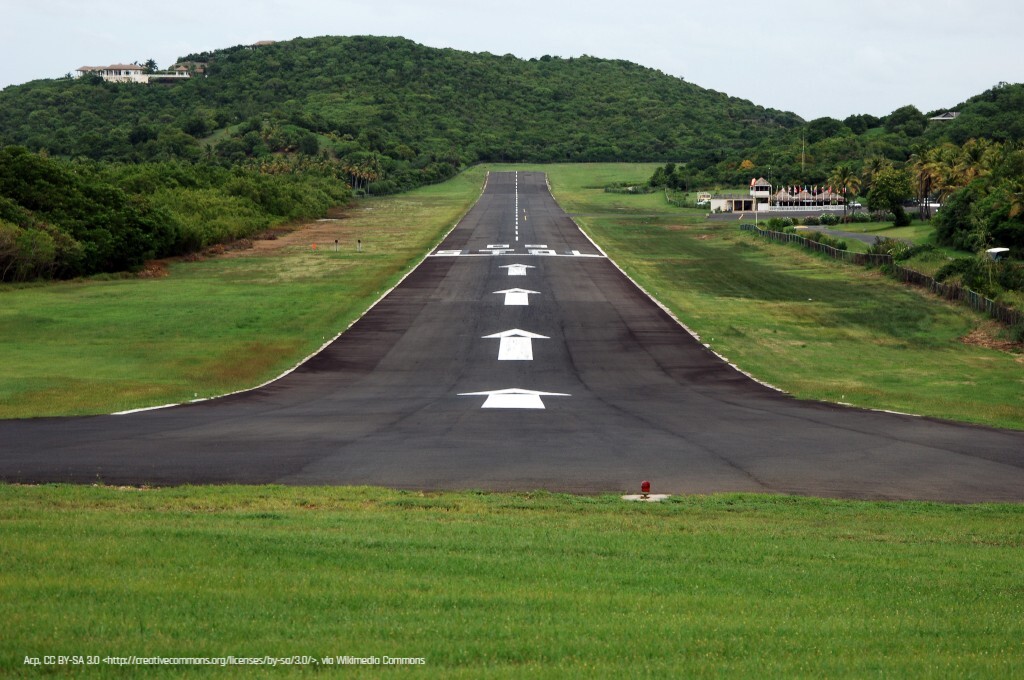
Mustique Airport operates as a privately managed airfield located on the northern side of the island.
The airport is physically close to residential zones, which compresses the final stage of travel to a matter of minutes. What defines the airport is not its proximity, but its constraints.
Operational characteristics are shaped by:
- A short runway designed for specific aircraft profiles
- Visual approach procedures without instrument guidance
- Daytime-only activity
The airfield functions with intentional limits. Traffic volume is controlled, aircraft type is restricted, and operational flexibility is secondary to safety and environmental conditions.
General facts about Mustique Airport
| Datos | Detalles |
|---|---|
| Código ICAO | TVSM |
| Código IATA | MQS |
| Ubicación | Mustique, Saint Vincent and the Grenadines |
| Elevación | ~8 ft |
| Longitud de la Pista | ~992 meters |
| Superficie de la Pista | Asfalto |
| Tipo de Aeropuerto | Private Airfield |
| Operating Conditions | Daylight VFR only |
Private Aviation at Mustique Airport

FBOs Dedicados
Mustique Airport, located on the northern part of Mustique Island, operates with a uniquely streamlined structure where all aviation activity is managed within a single, unified system. There is no separation between airport authority and ground handling provider—the same operational framework oversees runway management, aircraft coordination, and passenger movement.
This consolidation removes the layers typically found in larger airports and reduces handling to only what is essential:
- Aircraft coordination for arrivals and departures
- Direct passenger transition from aircraft to ground transport
- Core operational support for crew and aircraft
The absence of large FBO facilities does not create inefficiency—it eliminates it. Passengers step off the aircraft and move almost immediately into ground transfer, bypassing extended terminal procedures entirely.
From an operational standpoint, the key constraint is not infrastructure, but sequencing. With limited apron space and tightly managed runway usage, aircraft movements must be precisely timed and carefully aligned.
Our aviation specialists at Zadra coordinate directly with Mustique Airport to synchronise these movements well before departure from the origin point, ensuring a seamless flow from arrival to onward transfer.

Capacidades de la Pista
The runway at Mustique extends to approximately 992 meters. That figure alone defines the entire operation.
Aircraft selection is constrained by performance margins rather than preference.
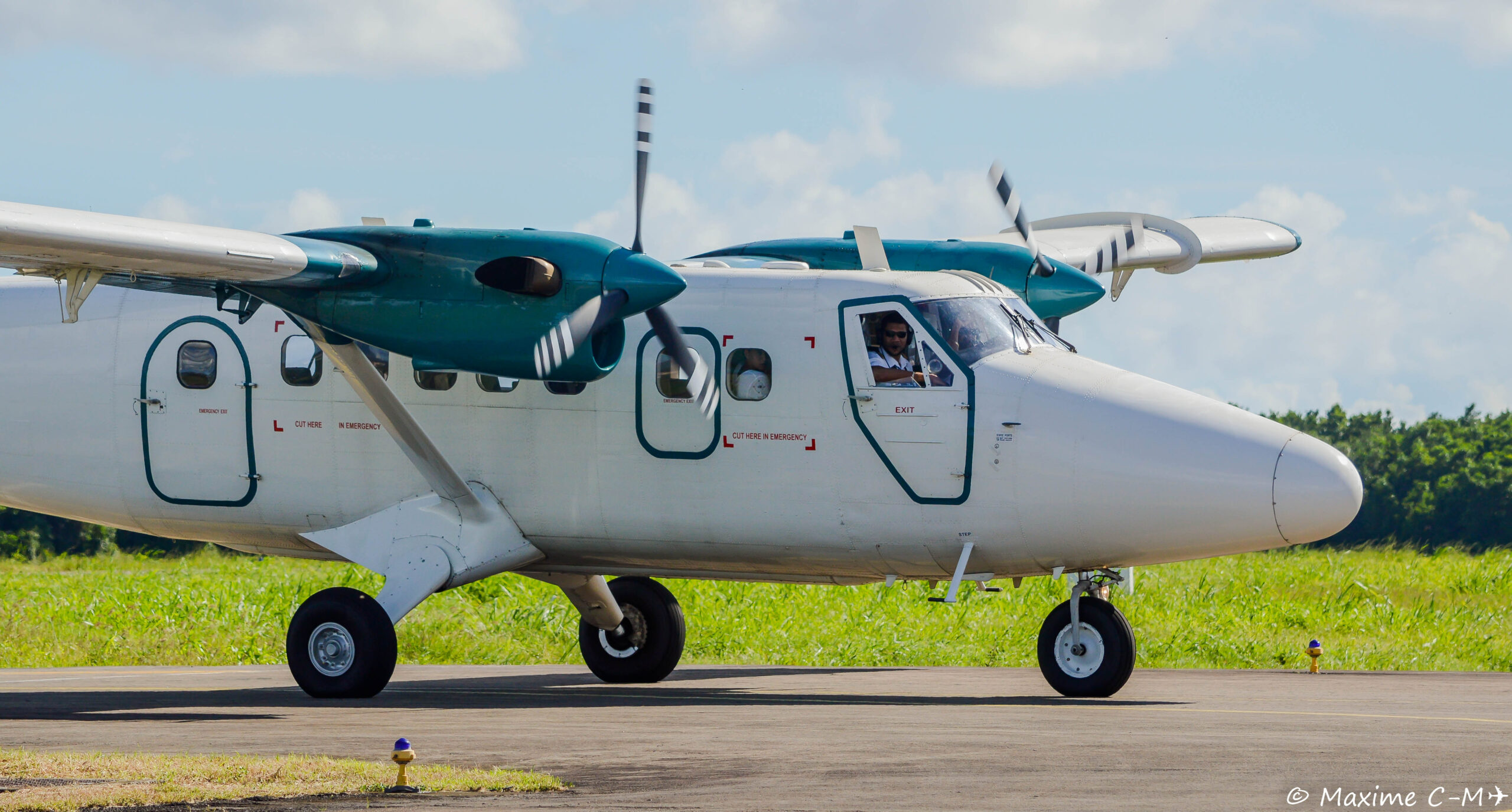
Turboprop aircraft are used because they:
- Generate sufficient lift at lower speeds
- Require shorter takeoff and landing distances
- Maintain control during steep approach profiles
Jet aircraft are excluded not by policy, but by physics.
Additional operational considerations include:
- Terrain-influenced approach paths
- Limited margin for aborted landings
- Dependence on visual reference throughout the approach
Pilots operating into Mustique require familiarity with the airfield or specific approval. This is not a routine destination within standard Caribbean operations.

Why Charter to Mustique
Mustique filters access through aviation complexity.
The requirement to change aircraft, the restriction on operations, and the need for precise coordination all contribute to a controlled flow of arrivals.
Private aviation does not simplify access to Mustique. It makes it possible.
Passengers choosing Mustique typically prioritise:
- Isolation over accessibility
- Predictability over flexibility
- Controlled entry over high-frequency connectivity
From a usage perspective, the journey is part of the filtering mechanism. Not everyone reaches Mustique, even within private aviation.
Ground Transportation on Mustique
Movement on the island is minimal by design.
The airport sits within immediate reach of residential areas, and most transfers are completed in under 10 minutes.
Ground transport is arranged in advance and synchronised with aircraft arrival.
Typical arrangements include:
- Villa-based transfers
- Resort-managed vehicles
- Local drivers familiar with property locations
There is no need for extended logistics once on the ground. The complexity exists before arrival, not after.
Our aviation specialists at Zadra align ground timing with flight sequencing so that the transition from aircraft to destination is immediate.
Private Aviation at Mustique Airport
Passengers arrive via a jet-capable airport and transfer to a turboprop aircraft for the final segment.
Aircraft sequencing is tightly controlled due to limited space and operational constraints at the airfield.
No. All operations are conducted under daylight conditions using visual flight rules.
Most Caribbean airports adapt to aircraft. Mustique requires aircraft to adapt to the airport.
La confianza de nuestros clientes
4.9 / 5
Basado en 1 328 opiniones verificadas
Ginebra 
ZUG
 Una empresa con sede en Suiza
 Ir arriba