





Yes. Business aviation flights are permitted, but operators must obtain arrival and departure slots and comply with the special airspace regulations that apply around Washington, D.C.
Alquiler de aviones privados hacia y desde el Aeropuerto Nacional Ronald Reagan de Washington (DCA)
Sin concesiones. Precisión absoluta. Rentable.

nuestros servicios
Private Jet Flights to Ronald Reagan Washington National Airport
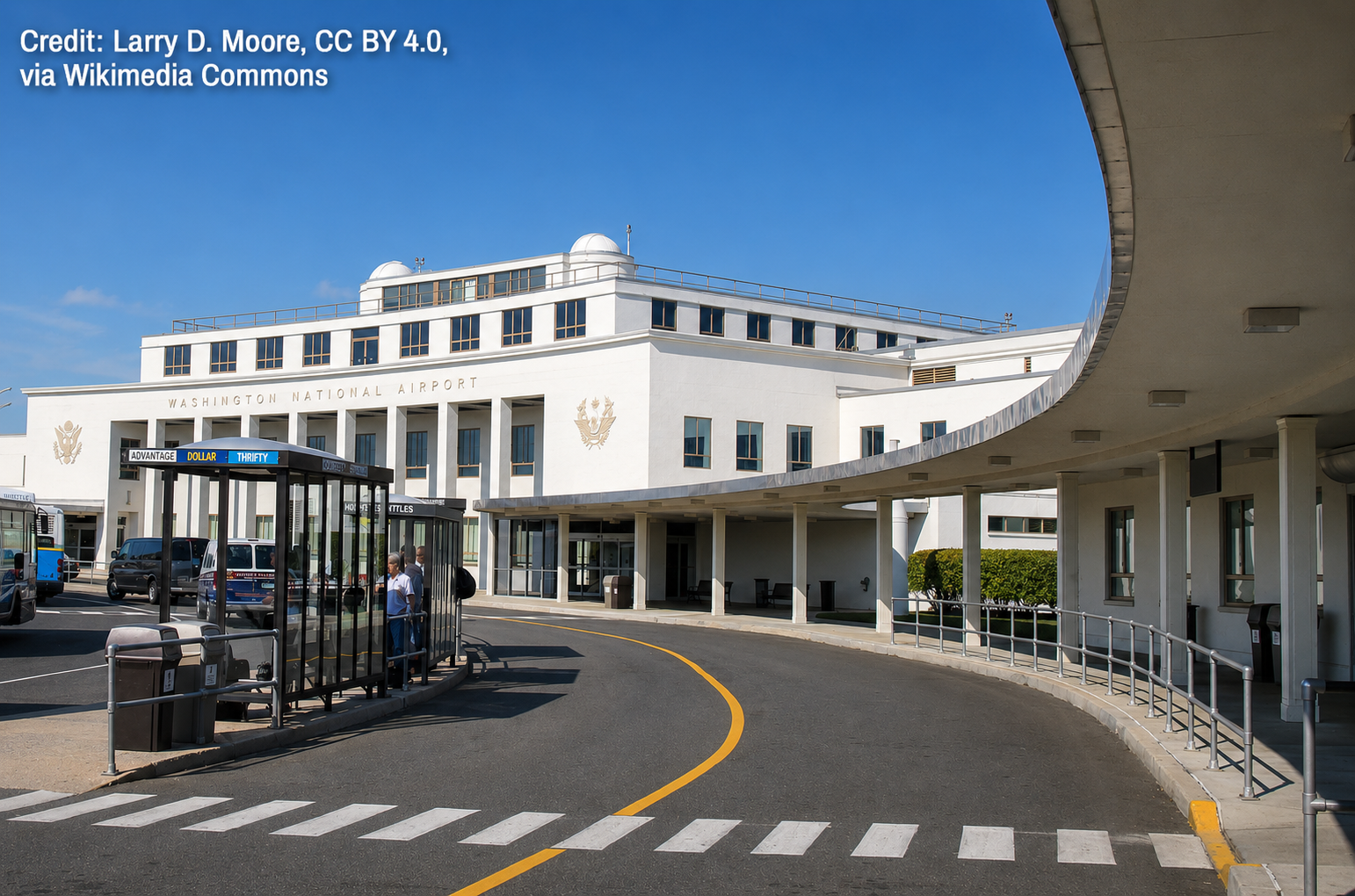
Ronald Reagan Washington National Airport is one of the most strategically positioned airports for travellers heading to the U.S. capital. The airport sits along the Potomac River in Arlington, Virginia, only a short drive from the central government district of Washington, D.C. This proximity makes the airport particularly attractive for business aviation passengers who need efficient access to political institutions, international organisations, and corporate offices.
Private aviation travellers typically select airports based on proximity, operational efficiency, and scheduling flexibility. Ronald Reagan Washington National Airport meets these criteria for many domestic charter routes. Our aviation specialists at Zadra Aviation Charter regularly coordinate flights to the Washington metropolitan region by evaluating aircraft performance, slot availability, and airspace regulations that apply to operations near the capital.

Resumen del aeropuerto
Ronald Reagan Washington National Airport operates as a key transportation hub serving the Washington metropolitan region. The airport lies just across the Potomac River from the city centre and functions within one of the most regulated airspace environments in the United States.
Due to its location near sensitive government facilities, aircraft movements are carefully controlled. The airport authority manages arrivals and departures through a slot allocation system that helps maintain safe traffic levels. As a result, private jet flights require advance coordination to secure operational windows.
From a charter planning perspective, the airport primarily supports domestic private aviation routes and medium-range business jet operations. Aircraft flying intercontinental missions often use Washington Dulles International Airport instead, where longer runways and expanded infrastructure accommodate larger long-range aircraft.
General facts about Ronald Reagan Washington National Airport (DCA)
| Datos | Detalles |
|---|---|
| Nombre del Aeropuerto | Ronald Reagan Washington National Airport |
| Código IATA | DCA |
| Código ICAO | KDCA |
| Ubicación | Arlington, Virginia, United States |
| Distance to Downtown Washington | Approximately 3 miles |
| Elevación del Aeropuerto | 15 ft / 5 m |
| Pistas | 3 |
| Pista más larga | 7,169 ft (2,185 m) |
| Zona Horaria | Eastern Time (UTC −5 / −4 DST) |
| Operational Environment | Washington D.C. Special Flight Rules Area (SFRA) |
Private Aviation at Ronald Reagan Washington National Airport (DCA)
FBOs Dedicados
Private jet passengers use Fixed Base Operators, commonly referred to as FBOs, rather than the commercial airline terminals.
FBO facilities function as dedicated terminals designed specifically for private aviation. These facilities provide passenger lounges, aircraft handling services, fueling support, and operational assistance for flight crews.
Signature Aviation
Signature Aviation
1 General Aviation Terminal
Hangar 7
Washington VA 20001
Estados Unidos
Signature Aviation operates one of the primary business aviation terminals serving Ronald Reagan Washington National Airport. The facility supports private aircraft arrivals and departures while offering a more discreet and streamlined passenger experience compared with commercial airport terminals.
Services typically available at this location include passenger lounges, aircraft fueling, ground handling support, crew briefing areas, and coordination of catering or ground transport services. Passengers generally arrive shortly before departure and proceed directly from the lounge to the aircraft.

Capacidades de la Pista
Runway configuration plays an important role in determining which aircraft types can operate efficiently at an airport. Ronald Reagan Washington National Airport features three intersecting runways designed to accommodate a wide variety of aircraft categories.
The airport’s primary runway measures approximately 7,169 feet in length, which supports many modern business jets operating on domestic routes. Two additional runways offer shorter distances that are commonly used depending on wind direction and traffic flow.
Aircraft weight, fuel load, and weather conditions all influence runway performance calculations. Pilots must evaluate these factors before departure to ensure safe takeoff and landing performance.
In practical terms, light jets and super midsize aircraft often perform particularly well at this airport because they require less runway distance. Larger long-range aircraft can operate under certain conditions but may require payload adjustments depending on flight distance and environmental conditions.
Approaches into the airport frequently follow the Potomac River corridor, a procedure designed to manage aircraft noise while maintaining safe separation from restricted areas surrounding Washington.

Why Charter a Private Jet to Washington
Washington, D.C., remains one of the most important global destinations for political decision-making, policy discussions, and international diplomacy. As a result, the city attracts frequent travel from executives, advisors, diplomats, and government officials.
Private aviation provides a practical travel solution for individuals whose schedules depend on flexibility and confidentiality. Charter flights allow travellers to depart according to their own timetable while reducing the time spent navigating commercial terminals.
Because Ronald Reagan Washington National Airport sits so close to the city centre, passengers often reach major government buildings, embassies, and business districts within minutes after landing. For travellers attending meetings or policy events, this time advantage can be significant.

Transporte Terrestre
Efficient ground transportation forms an essential part of the private aviation travel experience. Fixed Base Operators typically coordinate ground transport so that vehicles are ready immediately after aircraft arrival.
Common transportation arrangements include executive sedans, luxury SUVs, chauffeured limousines, and secure vehicles for diplomatic delegations. In certain cases, helicopter transfers may also be arranged to reach destinations throughout the wider Washington metropolitan region.
Due to the airport’s proximity to downtown Washington, many destinations can be reached quickly by road.
Approximate transfer times include:
- Capitol Hill: about 10 minutes
- White House area: about 10 to 12 minutes
- Georgetown: about 15 minutes
- Northern Virginia business districts: roughly 15 to 25 minutes
Our aviation specialists at Zadra coordinate ground transport alongside flight planning to ensure a seamless transition between air travel and ground mobility.
Private Aviation at Ronald Reagan Washington National Airport (DCA)
Aircraft in the light jet and super midsize categories are frequently used because their runway performance aligns well with the airport’s infrastructure and operational constraints.
Yes. Ronald Reagan Washington National Airport is located only a few miles from central Washington, making it the most convenient airport for direct access to government buildings and the central business district.
Washington Dulles International Airport offers longer runways and greater flexibility for long-range aircraft, particularly for intercontinental flights that require larger fuel loads.
Because the airport operates under a slot-controlled system, arranging a flight several days in advance increases the likelihood of securing preferred arrival or departure times.

La confianza de nuestros clientes
4.9 / 5
Basado en 1 328 opiniones verificadas
Ginebra 
Zug
 Una empresa con sede en Suiza
 Ir arriba