





No. The airport itself is straightforward. The surrounding environment requires planning.
Private Jet Planning to Pau Pyrénées Airport
Sin concesiones. Precisión absoluta. Rentable.

nuestros servicios
Pau is rarely the objective. It is the closest workable point to where you actually need to be.
When clients choose Pau, the decision is already made upstream. The destination is the mountains, a resort, or a property somewhere across southwest France or near the Spanish border. The airport just happens to sit at the right distance to make the rest of the journey efficient.
Private jets operate into Pau because it reduces what happens after landing. That is the real function.
Our aviation specialists at Zadra Aviation Charter plan Pau as part of a wider movement, where flight, terrain, and ground transfer are treated as one sequence rather than separate steps.
Resumen del aeropuerto
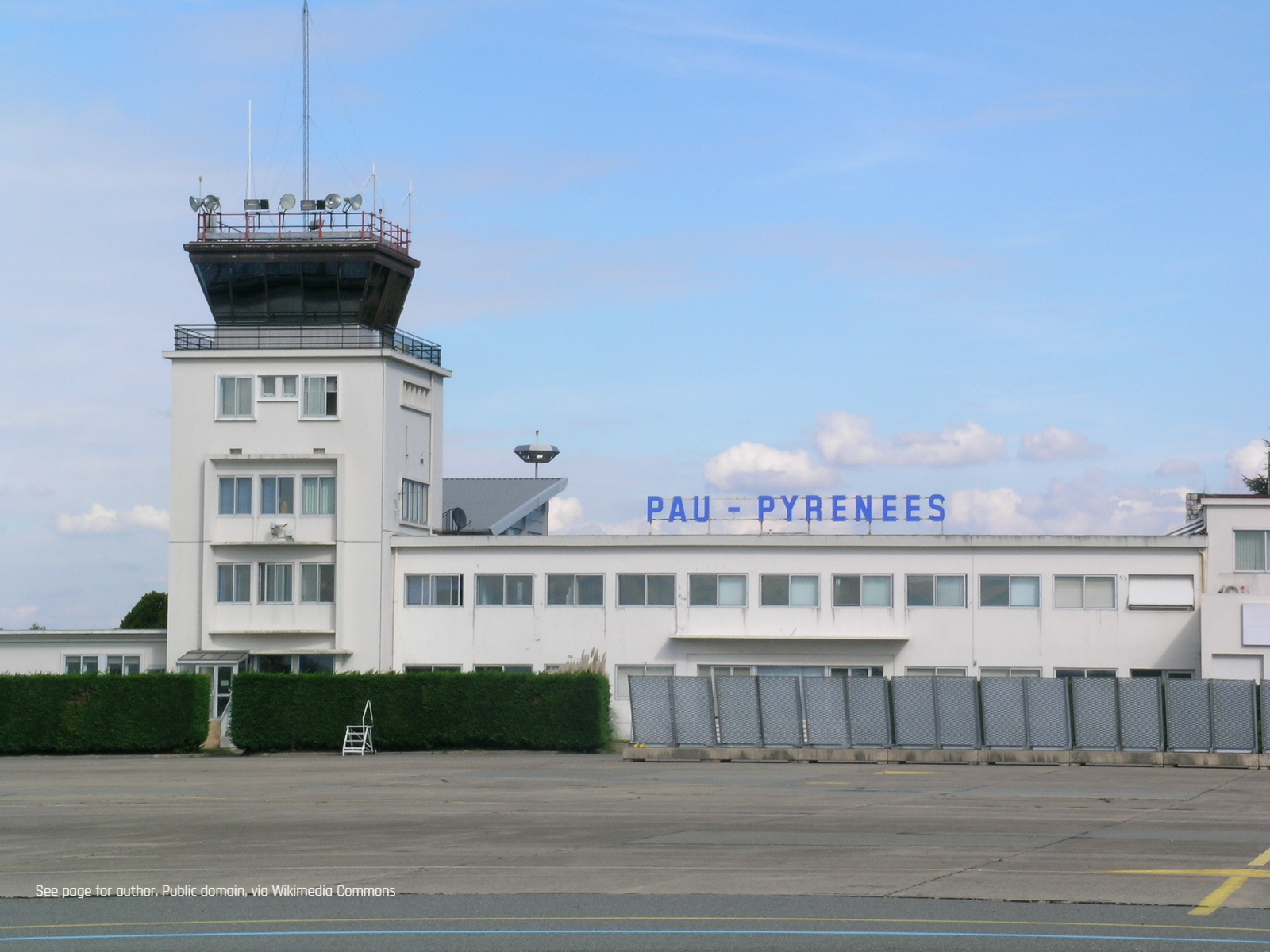
Pau Pyrénées Airport does not behave like a typical regional airport.
There is no sustained pressure on infrastructure. No meaningful congestion cycle. Aircraft are not competing for access.
What defines the airport is its position relative to the Pyrenees.
This shifts the operational focus. Instead of managing traffic, operators manage conditions. The airfield itself is accessible. The surrounding environment is what requires attention.
In practice, that means flights are planned around stability rather than availability.
General facts about Pau Pyrénées Airport
| Datos | Detalles |
|---|---|
| Código ICAO | LFBP |
| Código IATA | PUF |
| Ubicación | Pau, France |
| Distancia a la ciudad | ~10 km |
| Elevación | ~616 ft |
| Pista de aterrizaje | 13/31 |
| Longitud de la Pista | ~2,500 meters |
| Tipo de Aeropuerto | Regional International |
| Horario de Operación | Standard schedule |
Private Aviation at Pau Pyrénées Airport

FBOs Dedicados
CCI Pau Pyrénées manages both the airport and the handling.
There is no separation between authority and operator, which removes a level of complexity that exists in larger airports.
Aircraft coordination, passenger handling, fueling, and ground logistics all sit within the same structure.
This has a practical effect.
Arrivals are direct. Processing is short. Movement from aircraft to vehicle is immediate. There is no transition between systems because there is only one system in place.
From an operational standpoint, this consistency reduces friction and makes timing easier to control.

Capacidades de la Pista
The runway length at Pau is sufficient for most business jets operating within Europe.
What matters is not whether the aircraft can use the runway. It is how the aircraft uses it under local conditions.
Performance calculations remain standard. Interpretation is where experience comes in.
Wind direction relative to terrain, temperature variation, and approach profile all influence how the aircraft is operated on arrival and departure.
Nothing here is restrictive. It simply requires awareness.

Why Charter to Pau
Pau is chosen because it simplifies everything that follows the landing.
Using a larger airport further away introduces distance, variability, and additional planning layers. Transfers become longer. Timing becomes less predictable. The journey becomes segmented.
Pau removes that.
You land closer. You move directly. The operation remains continuous.
This is why it is used for:
- Access to Pyrenees resorts
- Travel across southwest France
- Cross-border movement into northern Spain
The airport itself is not the value. The reduction in complexity is.

Transporte Terrestre
Once on the ground, the journey becomes geographical rather than logistical.
Pau sits within short reach of the city and within driving distance of multiple mountain destinations.
Transfers are typically:
- Around 15 minutes into Pau
- Between one and two hours into the mountains
- Direct routes toward Spain, depending on the destination
Traffic is rarely the issue. Distance and terrain are.
Transport is arranged in advance, aligned with the aircraft arrival, so that there is no transition gap between air and ground.
Private Aviation at Pau Pyrénées Airport
Weather and terrain influence how the flight is structured.
Yes. The runway supports a wide range of aircraft under normal conditions.
Because it increases ground travel and breaks the efficiency of the journey.
It is commonly used for mountain access, but also for regional travel across southwest France.
La confianza de nuestros clientes
4.9 / 5
Basado en 1 328 opiniones verificadas
Ginebra 
Zug
 Una empresa con sede en Suiza
 Ir arriba