


Every airport in the world has a short code that identifies it on tickets, luggage tags and flight plans. In the United States, these codes can look simple, like LAX or JFK, but some of them seem to have nothing to do with the city they serve. Why is Chicago O’Hare ORD, and why does Orlando use MCO?
In this guide, we explain how US airport codes work, the difference between IATA and ICAO codes, the stories behind some of the most unusual codes, and the codes that private jet travellers are most likely to see.
IATA and ICAO: Two Types of Airport Codes
Most airports have two different codes, each used for a different purpose.
IATA codes are three-letter codes assigned by the International Air Transport Association. They are the codes passengers know best, as they appear on tickets, boarding passes, luggage tags and airline websites. Examples include LAX for Los Angeles and MIA for Miami.
ICAO codes are four-letter codes assigned by the International Civil Aviation Organization. They are used by pilots, air traffic control and flight planning systems. In private aviation, ICAO codes are also commonly used in flight schedules and flight briefs, as they identify each airport without any risk of confusion.
How ICAO Codes Work in the United States
In the contiguous United States, the system is easy to remember. The ICAO code is usually the three-letter US location identifier with a K added in front. For example, Los Angeles (LAX) becomes KLAX, and Denver (DEN) becomes KDEN.
Alaska and Hawaii follow a different pattern. Airports in Hawaii use the prefix PH, while airports in Alaska use prefixes such as PA. Honolulu is therefore PHNL, and Anchorage is PANC, according to the FAA location identifier guidelines.
Codes of the Main US Airports
The table below shows the IATA and ICAO codes of some of the main airports in the United States, including several of the busiest US airports.
| Airport | City | IATA code | ICAO code |
|---|---|---|---|
| Hartsfield-Jackson Atlanta International | Atlanta, GA | ATL | KATL |
| Dallas Fort Worth International | Dallas–Fort Worth, TX | DFW | KDFW |
| Chicago O’Hare International | Chicago, IL | ORD | KORD |
| Denver International | Denver, CO | DEN | KDEN |
| Los Angeles International | Los Angeles, CA | LAX | KLAX |
| John F. Kennedy International | New York, NY | JFK | KJFK |
| Orlando International | Orlando, FL | MCO | KMCO |
| Harry Reid International | Las Vegas, NV | LAS | KLAS |
| Miami International | Miami, FL | MIA | KMIA |
| San Francisco International | San Francisco, CA | SFO | KSFO |
| Newark Liberty International | Newark, NJ | EWR | KEWR |
| Boston Logan International | Boston, MA | BOS | KBOS |
| Daniel K. Inouye International | Honolulu, HI | HNL | PHNL |
| Ted Stevens Anchorage International | Anchorage, AK | ANC | PANC |

The Stories Behind Unusual US Airport Codes
Many US airport codes were created decades ago, when the airports had different names or were built on old airfields and military bases. When the airports were renamed, the codes often stayed the same.
Some letters were also not available. Codes starting with N were reserved for the US Navy, while K und W were reserved for radio and television stations. This explains why some cities ended up with codes that are not obvious at first sight.
| Code | Airport | Where the code comes from |
|---|---|---|
| ORD | Chicago O’Hare | Orchard Field, the original airfield on the site |
| MCO | Orlando International | McCoy Air Force Base, the former military base |
| MSY | New Orleans | Moisant Stock Yards, the site where the airport was built |
| EWR | Newark | Codes starting with N were reserved for the US Navy |
| BNA | Nashville | Berry Field Nashville Airport, as N-codes were not available |
| IAD | Washington Dulles | Originally DIA, changed because it looked too similar to DCA |
| MCI | Kansas City | Codes starting with K were reserved for radio and TV stations |
Why Do Some Codes End With an X?
Some airports, such as Los Angeles (LAX) and Portland (PDX), have an X at the end of their code. In the early days of aviation, many airports used two-letter codes. When three-letter codes became the standard, some airports simply added an X to their existing code. Los Angeles, for example, went from LA to LAX.
US Airport Codes for Private Jet Travellers
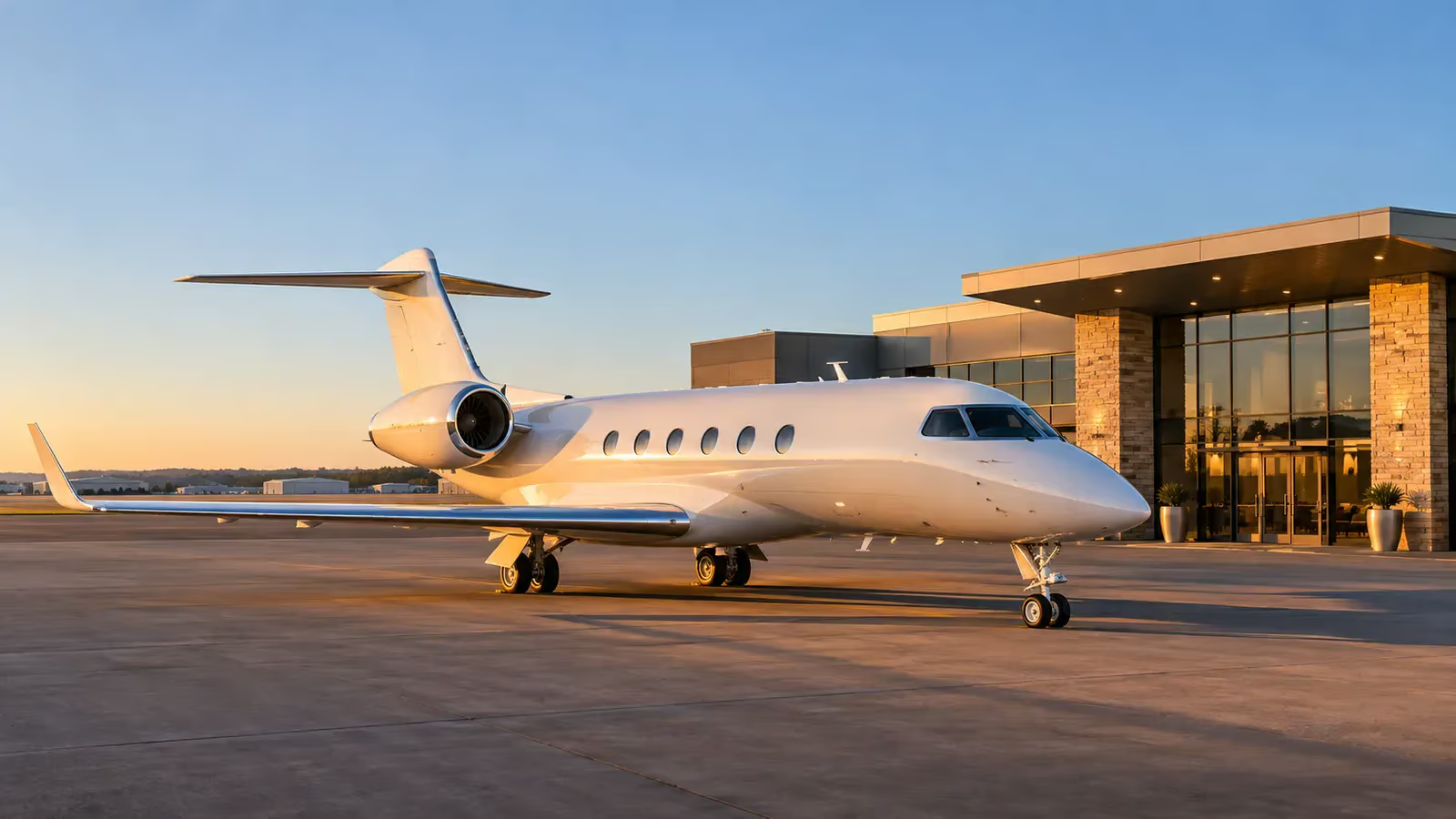
Private jet passengers often fly into smaller airports rather than the major commercial hubs. These airports are closer to city centres, less congested and have dedicated private terminals (FBOs). Knowing their codes makes it easier to read a flight schedule or flight brief.
| Major city | Private jet airport | IATA | ICAO |
|---|---|---|---|
| New York | Teterboro | TEB | KTEB |
| New York | Westchester County | HPN | KHPN |
| Los Angeles | Van Nuys | VNY | KVNY |
| Miami | Opa-locka Executive | OPF | KOPF |
| Dallas | Dallas Love Field | DAL | KDAL |
| Chicago | Chicago Executive | PWK | KPWK |
| Denver | Centennial | APA | KAPA |
| Boston | Hanscom Field | BED | KBED |
| Aspen | Aspen/Pitkin County | ASE | KASE |
| Palm Beach | Palm Beach International | PBI | KPBI |
Each of these airports has its own characteristics, such as runway length, opening hours or noise restrictions. You can read more about this in our guide to airport categories.

Why Airport Codes Matter When Booking a Private Flight
Many large cities have several airports, and some airports have similar names. Using the correct code avoids misunderstandings when planning a trip, especially when a flight departs from or arrives at a smaller airport rather than the main international airport.
For this reason, private flight documents usually show both the airport name and its code. This makes it clear to passengers, crew and handling agents exactly where the flight departs and arrives, and where passengers should go on the day of travel.
Frequently Asked Questions About US Airport Codes
Who assigns US airport codes?
Three-letter IATA codes are assigned by the International Air Transport Association, while four-letter ICAO codes are assigned by the International Civil Aviation Organization. In the United States, the FAA also assigns its own location identifiers, which form the basis of most ICAO codes.
Do all US airports have an IATA code?
No. Many small airports and airfields only have an FAA location identifier or an ICAO code. IATA codes are mainly used by airports with scheduled passenger flights, although many business aviation airports also have one.
Can two airports have the same code?
No. Each IATA code and each ICAO code is unique, which is why US airport codes are so useful for avoiding confusion between airports with similar names.
Plan Your Private Flight to the United States
Whether you are flying to New York, Miami, Los Angeles or a smaller regional airport, Zadra Aviation Charter helps you choose the most convenient airport and the right aircraft for your trip.
Planning a trip to the United States? Contact Zadra Aviation Charter to receive a tailored private jet charter quote.

Verwandte Beiträge
US Airport Codes Explained: IATA, ICAO and the Stories Behind Them
How US airport codes work, the difference between IATA and ICAO codes, the stories behind unusual codes, and the codes of the main private jet airports.
US Airport Codes Explained: IATA, ICAO and the Stories Behind Them
How US airport codes work, the difference between IATA and ICAO codes, the stories behind unusual codes, and the codes of the main private jet airports.

 Ein Schweizer Unternehmen
