





Yes. The airport supports year-round operations, although winter requires additional planning due to weather conditions.
Private Jet to/from Ivalo Airport (IVL)
Zero compromise. Absolute precision. Cost effective.

our services
Ivalo Airport serves as a key access point to Finnish Lapland and operates in one of the most demanding environments for private aviation in Europe. The combination of subarctic climate, seasonal demand, and remote geography defines how flights are planned and executed.
Private jet charter to Ivalo requires structured preparation. Our aviation specialists at Zadra coordinate aircraft suitability, cold-weather procedures, and ground logistics to ensure reliable operations in conditions where temperature and daylight directly influence flight execution.
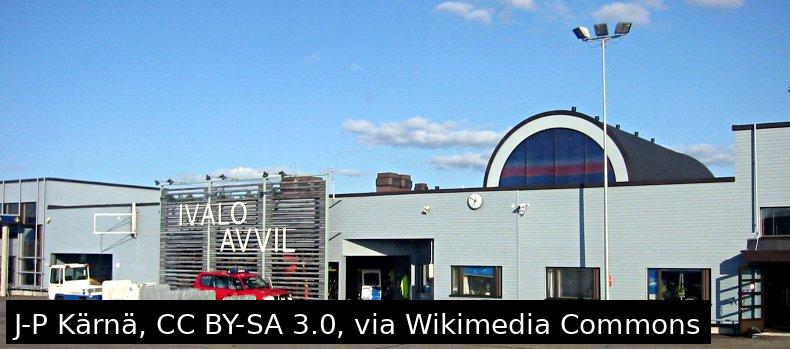
Airport overview
Ivalo Airport is located well above the Arctic Circle and functions as a regional airport with strong seasonal traffic during the winter months. It supports both scheduled services and private aviation, with infrastructure adapted to cold-weather operations.
The airport is not constrained by traffic density, but by environmental conditions and regional limitations. Snow, ice, and temperature extremes play a central role in operational planning, while limited nearby infrastructure requires contingency planning.
Its proximity to Lapland’s resorts makes it a preferred entry point for private jet clients seeking direct access to remote destinations.
General facts about Ivalo Airport (IVL)
| Fact | Details |
|---|---|
| ICAO Code | EFIV |
| IATA Code | IVL |
| Location | Ivalo, Finland |
| Region | Arctic Circle |
| Airport Type | Regional / Arctic |
| Runway Length | ~2,500 m |
| Slot Requirement | Generally not required |
| Traffic Profile | Seasonal (winter peak) |
| Operating Environment | Subarctic |
Private Aviation at Ivalo Airport (IVL)

Dedicated FBOs
Airpro provides ground handling and business aviation support at Ivalo Airport. The handling structure at Ivalo is streamlined and specifically adapted to a regional Arctic environment rather than large-scale international traffic.
Airpro manages a full range of services, including passenger and crew handling, aircraft servicing and fueling, coordination of de-icing procedures, and ground transport arrangements. From an operational perspective, efficiency relies heavily on preparation and precise timing. During winter operations, critical resources such as de-icing equipment and ground support must be scheduled well in advance.
Unlike major hubs, operational capacity at Ivalo is not driven by traffic volume but by environmental readiness. Zadra coordinates closely with local teams to ensure that aircraft turnaround, passenger flow, and all support services are aligned with prevailing weather and operating conditions.
Airpro – Ivalo Airport
Lentokentäntie 290
99800 Ivalo
Finland

Runway Capabilities
Ivalo Airport operates a runway of approximately 2,500 meters, allowing access for a wide range of private jet categories.
This runway supports:
- Light and midsize jets without restriction
- Selected heavy jets depending on payload and conditions
However, performance is influenced by environmental factors:
- Low temperatures affect aircraft systems and procedures
- Snow and ice conditions require continuous runway maintenance
- De-icing is frequently required before departure
Cold air can improve engine efficiency, but operational complexity increases due to ground handling requirements and system checks.
Our aviation specialists at Zadra evaluate runway condition reports, weather forecasts, and aircraft readiness before confirming operations.

Why Charter to Ivalo
Ivalo provides direct access to one of Europe’s most remote and exclusive travel regions. It serves as a gateway to Lapland’s wilderness, where access by commercial routes is limited and often indirect.
Private jet clients travel to Ivalo for:
- Northern Lights experiences
- Winter resorts and lodges
- Remote Arctic tourism
The airport allows travellers to reach destinations that would otherwise require extended travel via southern Finland, significantly reducing overall journey time.

Ground Transportation
Ground transport from Ivalo Airport is adapted to a remote and weather-dependent environment.
Primary options include:
- Chauffeur-driven vehicles to resorts and lodges
- Private transfers equipped for winter conditions
Travel times vary depending on destination and road conditions. Snow and ice can influence journey duration, particularly during active weather periods.
Helicopter transfers are limited in this region, making ground transport the primary connection method.
Zadra coordinates all transfers in advance, ensuring that vehicles, routes, and timing are aligned with arrival schedules and local conditions.
Private Aviation at Ivalo Airport (IVL)
The combination of Arctic climate, remote location, and seasonal demand defines how flights are planned and executed.
Some heavy jets can operate, but aircraft suitability depends on payload, conditions, and operational requirements.
During winter, de-icing is commonly required before departure due to snow and ice.
Ground transport is the primary method, with chauffeur-driven vehicles adapted to winter conditions.
Trusted by our clients
4.9 / 5
Based on 1,328 verified reviews
Geneva 
ZUG
 A Swiss-Based Company
 Go Top